The golden triangle of the West Midlands, encompassing Coventry, Rugby, and Nuneaton, serves as the logistics and warehousing backbone of the United Kingdom. Because these massive distribution facilities house millions of pounds’ worth of high-value stock, transit assets, and critical data infrastructure, they are prime targets for organised criminal networks.
But securing a commercial warehouse requires far more than basic door sensors. It demands a highly specialised, layered electronic security design that integrates access control, perimeter barriers, and high-level intruder detection to ensure asset protection and meet strict corporate insurance requirements.
Layer 1: Structural Perimeter and Shell Protection
The primary objective of warehouse security is to detect an intrusion before a criminal reaches the internal stock floor. Given the sprawling footprint of modern logistical distribution hubs, shell protection must be robust:
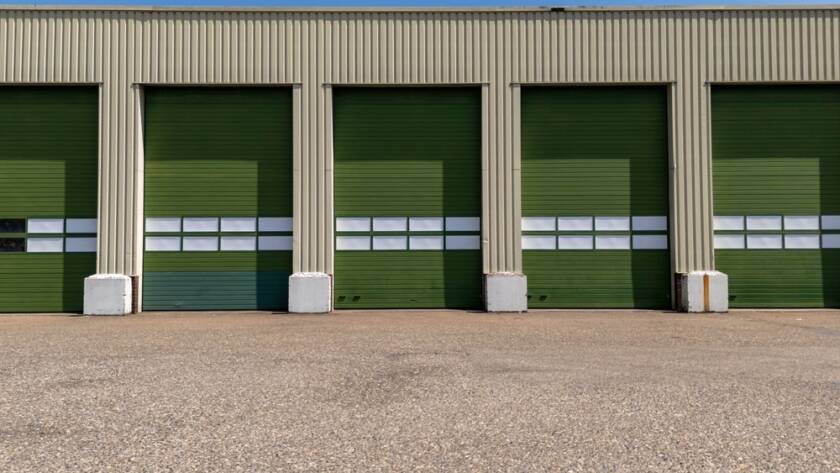
- High-Grade Magnetic Contacts: Standard heavy-duty roller shutter doors are vulnerable to physical lifting or prying. Professional layouts utilise industrial-grade, armoured magnetic contacts recessed into the floor track to track millimetric movements.
- Acoustic Glass-Break and Seismic Detectors: Warehouses frequently feature extensive skylights or corrugated metal cladding panels that intruders can cut through to bypass traditional doorways. Mounting seismic sensors along vulnerable wall segments and acoustic frequency detectors near glazing ensures that any attempts to breach the structure are flagged instantly.
Layer 2: Volumetric Space Trapping and Environmental Challenges
Once an intruder enters a warehouse space, internal detection faces major environmental hurdles. High ceilings, industrial heating currents, moving ventilation fans, and shifting ambient temperatures will cause standard motion detectors to trigger continuous false alarms.
To combat these challenges, industrial systems do not use basic residential motion sensors. Instead, engineers deploy Dual-Technology (Dual-Tech) Detectors. These devices combine long-range passive infrared (PIR) tracking with high-frequency microwave sensors.
The system will only trigger an alarm state if both sensors register a target matching human mass and speed simultaneously. This technical configuration filters out moving air currents, forklift thermal signatures, and shifting inventory shadows.
Layer 3: Integrated Hold-Up and Access Contained Frameworks
Warehouse staff frequently operate on 24-hour shift rotations, meaning security systems must run alongside active logistics operations. This operational requirement is managed through smart zoning and partitioning:
- System Partitioning: Allows offices, data server rooms, and high-value cargo cages to remain fully armed even while the main loading bays are actively occupied by staff and delivery drivers.
- Monitored Hold-Up Devices (Panic Buttons): Fixed and wireless personal panic buttons are wired directly into high-risk areas like cash offices, shipping docks, and security gates. These lines are monitored 24/7 on a completely silent profile, allowing staff to alert the monitoring centre of a duress situation without tipping off an aggressive intruder.