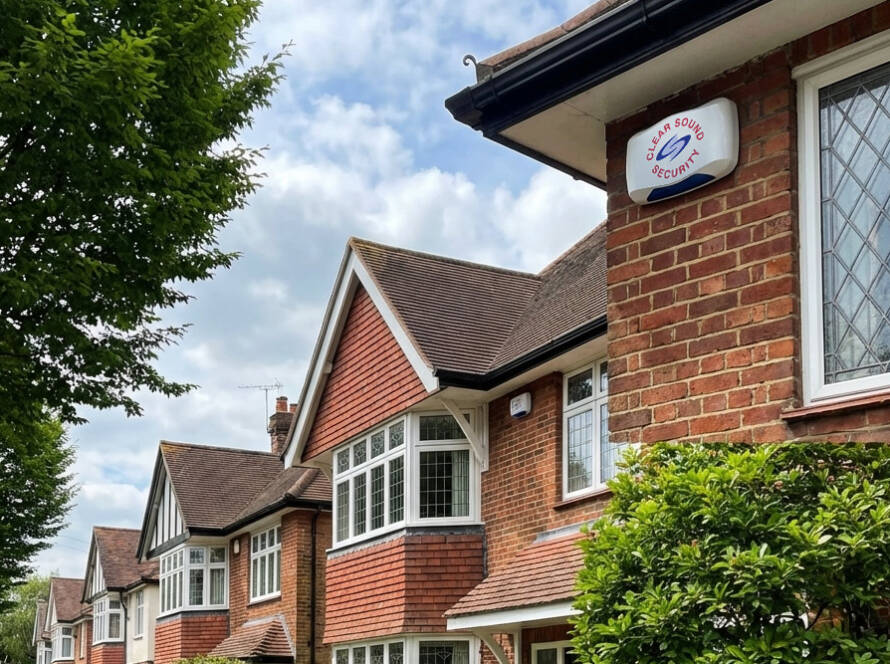
Preserving a period home or a Grade II-listed property in areas such as Allesley Village, Earlsdon, or other historic districts across Warwickshire introduces a unique architectural challenge. Property owners must protect high-value assets and historical structures from intrusion, but they must do so without altering the aesthetic fabric of the building or going against strict conservation rules.
For properties governed by historic conservation guidelines, deploying a standard security setup isn’t possible. It requires a tailored approach that balances modern property protection with the statutory demands of local planning authorities.
Navigating Listed Building Consent for Security Hardware
Under the Planning (Listed Buildings and Conservation Areas) Act, any internal or external alterations that affect the character of a building of special architectural or historic interest require Listed Building Consent from Coventry City Council.

- Non-Compliant Installations: Unaccredited installers often rely on invasive techniques, such as heavy drilling through historic masonry, surface-mounting white plastic conduit across period timber beams, or anchoring heavy external sounders onto fragile Tudor or Victorian brickwork. These actions can result in structural damage and lead to council enforcement notices or criminal prosecution for unauthorised alterations.
- The Professional Alternative: Certified engineers work within conservation parameters. This includes painting external sounder housings to blend perfectly with local lime mortar colours, routing cables through existing floorboard gaps, or specifying specialised, non-invasive fixings that can be completely reversed without degrading the primary fabric of the building.
The Role of Advanced Grade 2 Wireless Technology in Heritage Sites
While hard-wired installations are the benchmark for permanent stability, drilling routing channels into historical wood panels or decorative plaster work is often legally restricted. In these specific scenarios, professional Grade 2 wireless technology provides a compliant path forward.
Unlike consumer wireless gadgets, professional Grade 2 wireless components conform to strict European performance standards, such as EN 50131. They utilise frequency-hopping, military-grade encryption to protect the signal from external digital interference.
Because these miniature sensors are completely battery-powered and communicate via secure radio bands back to a concealed control hub, they require zero structural drilling, no cabling, and leave the historical interior entirely unblemished.
Strategic Perimeter Protection Over Space Detection
In period homes featuring vast spaces or structurally complex layouts, relying solely on interior motion sensors (PIRs) is an outdated approach. If an intruder triggers a hallway PIR, they are already inside the property, where valuable architectural elements or heirlooms can be damaged.
Professional design prioritises perimeter protection over internal space detection. By installing miniature, wireless shock sensors and magnetic contacts directly onto the frames of historic sash windows or original oak doors, the alarm system triggers the moment forced vibrations are detected, deterring the intruder before they compromise the structural perimeter.