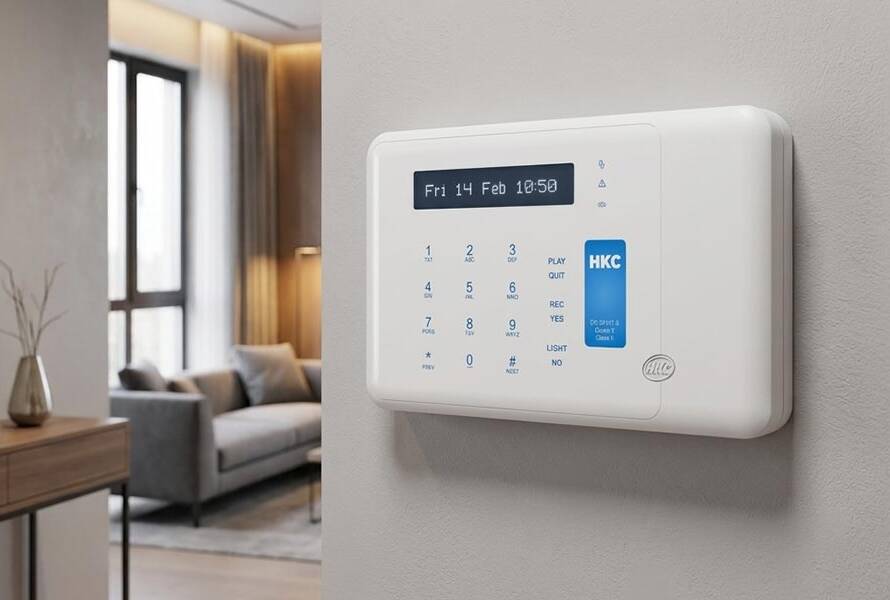
The domestic security market features an abundance of wireless smart alarm kits promising a simple, DIY setup. And while these consumer gadgets offer basic app convenience, they introduce many critical technical vulnerabilities when compared to an engineered, professional Grade 2 wired intruder alarm system that complies with PD 6662 and BS 8243 standards.
For homeowners seeking dependable, uninterrupted protection that satisfies insurance requirements, understanding the differences between consumer wireless electronics and professional security engineering is vital. Let’s break it down.
The Vulnerabilities of Smart Wireless Systems
Most consumer-grade wireless alarm kits communicate entirely via radio frequencies (typically unencrypted bands) and rely on internal consumer batteries. This architecture introduces clear points of failure:
- Signal Interference & RF Jamming: Sophisticated intruders targeting properties across the West Midlands increasingly employ small electronic ‘RF jammers’ that block the radio frequencies between wireless sensors and the central smart hub, blinding the alarm before entry.
- Battery Depletion Disruption: Maintaining 10 to 15 independent wireless sensors requires continuous battery maintenance. If a sensor battery drops below operational voltage while a property is vacant, a protection gap forms.
- Broadband Dependency: Many consumer smart kits possess no cellular backup; if your home router drops offline or power to the street is cut, the alarm loses all external transmission capabilities.
The Structural Superiority of Grade 2 Professional Systems
A professionally engineered Grade 2 system relies on solid physical architecture and conforms rigidly to strict British and European safety standards.
Rather than relying on vulnerable radio bands, a professional wired alarm system transmits data and power via specialised, screened security cabling embedded within the property’s fabric. This physical link makes the system completely immune to digital ‘RF jamming’ techniques.
Furthermore, professional systems feature a central control panel containing an industrial-grade, rechargeable backup power supply. Even during a total mains power outage, the entire alarm system remains fully operational for a minimum of 12 hours.
| Operational Metric | Professional Grade 2 Wired Alarm | Consumer Smart Wireless Kit |
|---|---|---|
| Physical Infrastructure | Solid-core screened cabling (Immune to jamming) | Radio frequencies (Vulnerable to RF interference) |
| Power Resilience | Centralised UPS battery backup (12+ hours) | Individual sensor batteries (Requires regular replacement) |
| Signalling Security | Dual-path cellular encrypted monitoring | Standard home Wi-Fi network |
| Insurance Compliance | Fully approved for high-value policies | Seldom recognised by major underwriters |
Investing in your family’s safety requires moving past retail gadgets. A professionally engineered and installed system provides the reliable, hard-wired performance needed to protect your home and family in the long term.
Secure your home with certified engineering
Don’t compromise your home security with consumer-grade electronics. Get in touch with our accredited professionals to learn more about our professional CCTV installation services for customers in Coventry, Warwickshire and beyond.