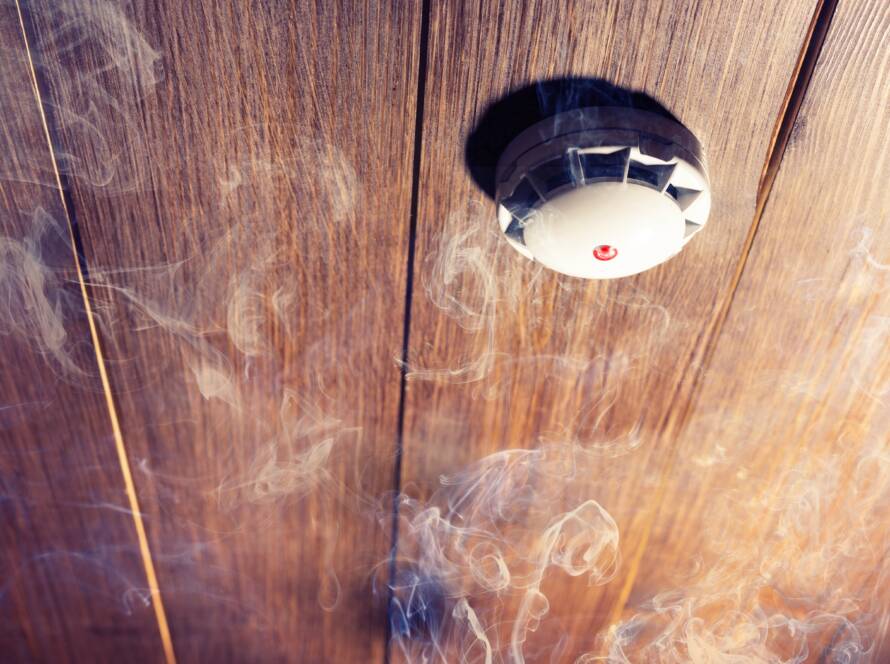
Educational environments, ranging from primary schools and academies to university facilities across Coventry, present complex fire safety challenges. Facilities managers must manage high occupant density, distinct building wings, active science laboratories, commercial kitchens, and the threat of accidental or malicious false alarms.
Designing and maintaining life safety systems for educational sites requires strict adherence to Department for Education guidelines (Building Bulletin 100 / BB100) alongside BS 5839-1 standards.
Key Mandates Under Building Bulletin 100 (BB100)
Building Bulletin 100 outlines the fire safety design standards for schools in England. It emphasises two core objectives: protecting life safety and preventing property loss that could disrupt educational continuity.
- Category L2/L1 Automatic Detection: BB100 generally mandates high levels of automatic fire detection (Category L2 or L1). This requires optical coverage in all circulation spaces, teaching rooms, storerooms, roof voids, and specialised practical areas (such as design technology workshops and chemistry labs).
- Interconnected Alarm Networks: School campuses with multiple buildings must use networked control panels. A fire detected in the science block must immediately register on the main administrative panel, allowing site managers to coordinate campus-wide responses.
Managing High-Risk Educational Environments
Different areas within an educational facility present distinct environmental risks that require tailored detector selection:
School Area | Primary Hazard | Recommended Detection Hardware |
Science Labs & DT Workshops | Chemical fumes, dust, localized heat | Rate-of-Rise Heat Detectors or Multi-Sensors |
Catering Kitchens & Canteens | High steam, cooking oils, high heat | High-Threshold Fixed Temperature Heat Sensors |
Sports Halls & Gymnasiums | High ceilings, physical ball impacts | Optical Beam Detectors with protective impact cages |
Corridors & Assembly Halls | High footfall, accidental damage risk | Polycarbonate covers on all Manual Call Points |
School Holiday Servicing and Term-Time Compliance
Schools must maintain strict compliance logs while avoiding disruption during teaching hours.
- Weekly Testing Routines: Designated site staff must conduct weekly call point tests using a rotating schedule across different school zones, logging all results in the official Fire Safety Logbook.
- School Holiday Service Schedules: Professional 6-monthly engineering inspections are best scheduled during half-terms or summer holidays. This allows engineers to perform full acoustic sounder checks (verifying 65dB(A) minimums inside quiet classrooms and 75dB(A) in noisy music rooms) and test every detector without disrupting classes.
Integrated Lock-Down and Class Change Integration
Modern educational fire panels frequently integrate with wider campus management systems:
- Class Change Signalling: The fire alarm sounders or visual beacons can be programmed to double as class transition bells using distinct, non-emergency tone profiles.
- Integrated Emergency Lock-Down: In addition to fire evacuation protocols, school control panels can interface with site lock-down systems, enabling staff to trigger immediate, distinct security alerts in response to external perimeter threats.
Deliver an accredited life safety network for your school or educational site
Clear Sound Fire & Security provides complete BAFE-certificated design, installation, and maintenance for educational facilities across Warwickshire. To upgrade your fire detection system, call us on 024 7666 8366 or fill out our contact form today.