When evaluating home security options in Coventry and Warwickshire, homeowners face an expansive market of surveillance products. The choice generally splits into two distinct categories: consumer-grade, battery-powered wireless cameras, or professionally engineered, hard-wired IP (Internet Protocol) CCTV systems.
While off-the-shelf wireless products are widely marketed for their ease of deployment, they operate under technical constraints that can impact long-term reliability. To design a system capable of providing dependable protection and legally admissible evidence, it is necessary to examine how these systems perform across network stability, data storage security, and optical performance.
Network Stability: The Vulnerability of Wi-Fi vs. Power-over-Ethernet (PoE)
The primary operational difference between these systems lies in how data and power are transmitted.
- Smart Wireless Cameras: These devices rely entirely on a local Wi-Fi network to transmit video and internal batteries for power. This introduces two vulnerabilities. First, typical brick and block residential builds across Warwickshire and the West Midlands can degrade Wi-Fi signals, causing latency or dropped recordings. Second, wireless frequencies are susceptible to external interference, including intentional digital blocking or ‘Wi-Fi jamming’ used by sophisticated intruders to temporarily blind wireless signals.

- Professional Wired IP Systems: Hard-wired systems mitigate these risks by using physical data cables to connect each camera directly to a central recorder. Utilising Power-over-Ethernet (PoE), a single cable delivers both stable power and secure data transmission. Because the link is entirely physical, it remains unaffected by local Wi-Fi dropouts, router resets, or wireless signal interference, ensuring continuous 24/7 monitoring.
Data Storage Integrity: Local NVR Architecture vs. Cloud Subscriptions
Where and how recorded video data is stored is a critical factor in maintaining system integrity during a domestic incident.
- Cloud-Dependent Storage: The majority of consumer wireless cameras do not feature local storage capacity. Instead, they stream compressed video clips over the home internet connection to a remote cloud server. This architecture creates a vulnerability: if your home internet connection goes down or is cut during an intrusion, no data is saved. Furthermore, these systems usually require ongoing, per-camera monthly subscription fees to retain access to historic footage.
- Network Video Recorder (NVR) Architecture: A professional wired setup stores data locally on a secure, dedicated hard drive housed within a physical network video recorder (NVR) kept inside the property. This localised architecture means the system logs high-resolution video continuously for weeks at a time, independent of internet availability. Even during a complete broadband outage, your security perimeter continues to record normally.
Optical Quality and Performance Metrics
If an incident occurs on your property, the recorded footage must meet the standard required by West Midlands Police to assist in identification.
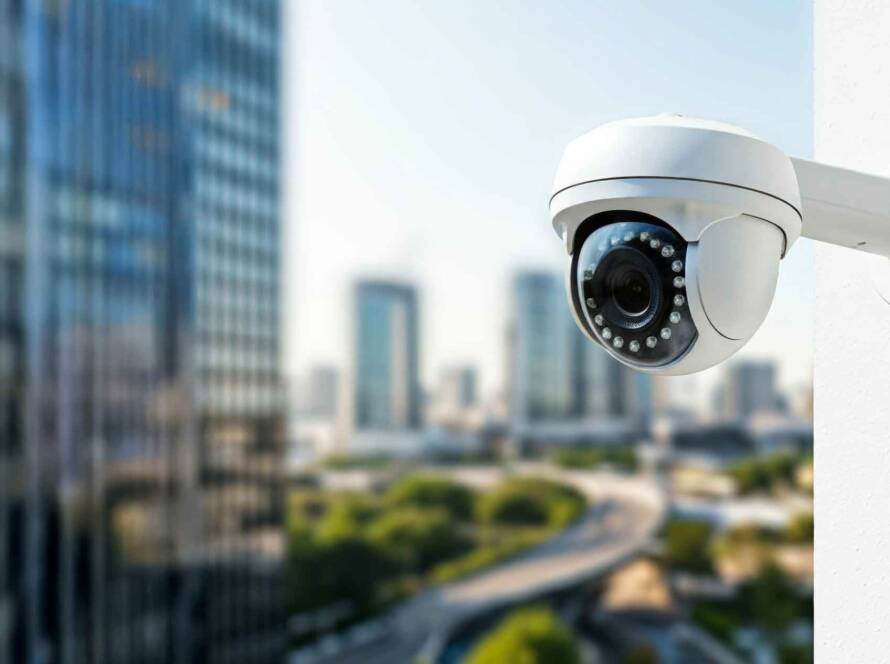
Commercial-grade dome or turret cameras used in professional installations feature larger optical sensors and advanced processing chips compared to DIY alternatives. These components allow the system to capture true 4K Ultra-HD resolution, maintaining image clarity when zooming in on details like registration plates or facial features.
Additionally, professional wired systems integrate directly into local networks to provide secure, encrypted remote viewing on smartphones, delivering the same mobile convenience as consumer technology but without the corresponding vulnerabilities or recurring subscription models.