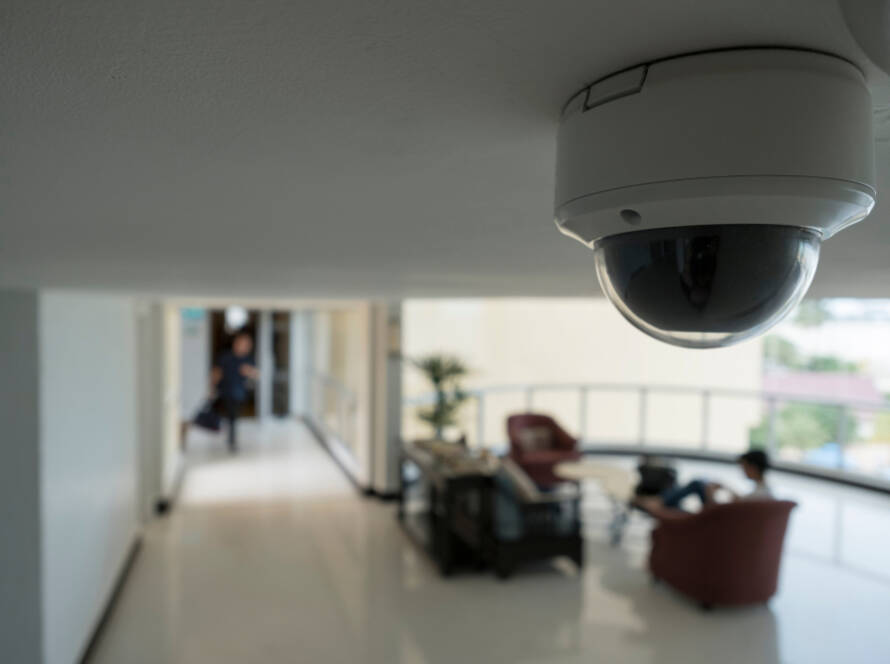
Property managers and business owners across Coventry frequently inherit legacy security infrastructure when moving into new premises or reviewing older corporate assets. When a CCTV system begins showing signs of age, such as intermittent signal dropouts or degraded night vision, decision-makers must evaluate whether to invest in ongoing repairs or execute a complete system replacement.
Navigating this choice requires an objective technical analysis. Investing money into fixing an obsolete system can often lead to further problems, when it can sometimes be better to look at installing a new system altogether.
Identifying Critical ‘End-of-Life’ Technical Symptoms
Surveillance systems do not always fail all at once; instead, they display clear indicators of wear over time, including:
- Thermal Degradation of Image Sensors: Older analogue or early-generation IP cameras suffer from sensor wear due to years of solar exposure. This results in colour bleeding, permanent purple tinting, or a severe loss of contrast that renders recorded footage useless for police identification purposes.
- Storage Controller Failure: Legacy Digital Video Recorders (DVRs) utilise outdated compression formats (such as H.264). These codecs require massive amounts of storage space and place continuous stress on old mechanical hard drives, leading to recurring write errors and lost recording windows.

- Firmware and Cyber Vulnerabilities: Obsolete IP cameras running outdated firmware often lack the encryption protocols required to defend against modern network intrusions. If an older system cannot be patched to current cybersecurity standards, it poses a direct vulnerability to your wider corporate network.
The Engineering Compromise: HD-TVI Hybrid Migrations
A major concern when replacing an older CCTV system is the disruption and cost associated with removing old cabling from walls, ceilings, and underground conduits.
To resolve this challenge without requiring a full structural rewire, professional installers can implement an HD-TVI (High Definition Transport Video Interface) hybrid architecture.
This specialised engineering approach allows high-definition digital signals (up to 4K resolution) to transmit seamlessly over existing, legacy coaxial cabling. By upgrading only the central recording unit and the specific camera endpoints, businesses can secure ultra-high-definition performance while avoiding the labour costs of replacing structural wiring.
Cost-Benefit Metrics: Emergency Call-Outs vs. Certified Modernisation
Relying on an unaccredited or unserviced legacy system introduces significant financial volatility. The cost of frequent emergency engineer call-outs to address recurring hardware faults can quickly surpass the capital required to install a modern, reliable system.

Furthermore, if a major break-in occurs while an unserviced system is offline, your commercial insurance underwriter may reject the claim due to a failure to maintain functional security systems. Upgrading to a modern, NSI Gold-certified CCTV installation eliminates these vulnerabilities, stabilises operational costs, and satisfies corporate risk compliance from day one.
Assess the true health of your surveillance network
Avoid the financial risks of running obsolete security hardware. Contact the experts at Clear Sound Fire & Security on 024 7666 8366 to book a formal evaluation of your video surveillance system and equipment.